
IT Strategy & Checklist for Chicagoland Manufacturers in 2026
- December 30, 2025
- Posted by: The Editor
- Categories:
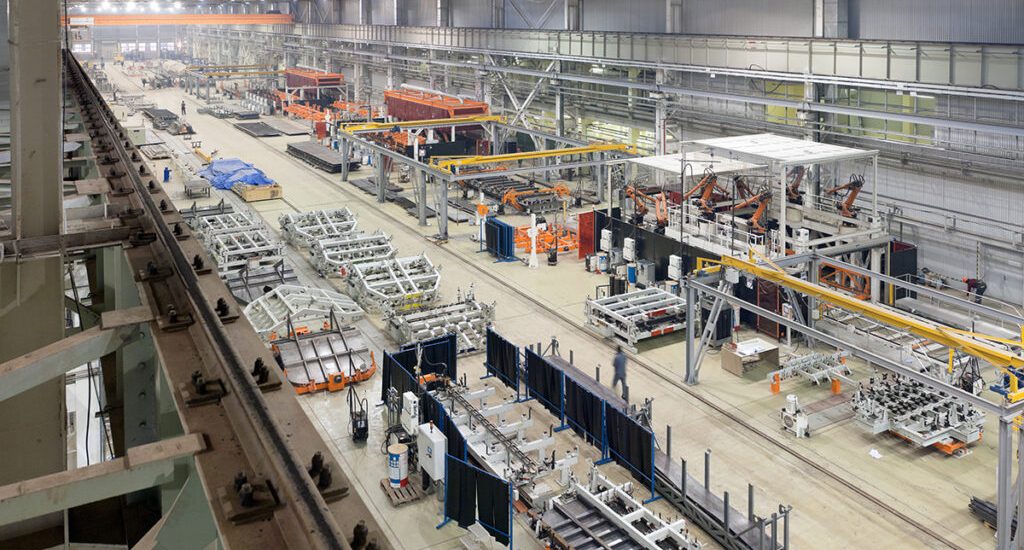
How Lionhive Helps Plants in and around Chicago Illinois run Secure, Stable, and Always-On
Chicagoland is one of North America’s strongest manufacturing regions. From the massive Elk Grove Village industrial park and the I-88 technology and logistics corridor to aerospace-heavy Rockford, fast-growing DeKalb, Kenosha’s manufacturing and packaging investments, and the steel and heavy industry of Northwest Indiana, this region still makes things at scale. (Elk Grove Village)
But the IT footprint behind those factories is no longer “just a few servers and a plant network.” Manufacturers now run:
- ERP and MES
- CAD/CAM and PLM
- OT networks, PLCs, SCADA
- IoT sensors and data platforms
- Cloud services for collaboration, quality, and supply chain
When IT is weak, it hits throughput, yield, quality, and delivery directly.
This article gives a comprehensive IT checklist and strategy for manufacturers across Chicagoland—including Chicago and suburbs, Elk Grove Village, Streamwood, Hoffman Estates, Glendale Heights, Carol Stream, Geneva, Batavia, Itasca, Naperville/Aurora, DeKalb, Rockford, Kenosha, and Northwest Indiana—and shows how Lionhive can help you execute it.
1. Plant-Level IT Strategy: Start with Business Outcomes
Before you talk tools, list the outcomes that matter for your plant network:
- Fewer unplanned line stoppages
- Better on-time delivery
- Tighter quality and traceability
- Lower risk of ransomware or IP theft
- Faster onboarding of new lines, sites, or acquisitions
Your IT strategy should answer:
- What must never go down?
- What data must never be lost?
- What systems must be auditable (for customers, regulators, or OEMs)?
- Where are you relying on one person’s tribal knowledge?
If your strategy does not explicitly tie back to line uptime, order fulfilment, and quality, it will struggle to get buy-in from operations.
2. Network & Infrastructure Checklist
Chicagoland plants often sit in older buildings with incremental additions: extra rooms, mezzanines, new lines bolted on. Networks tend to grow the same way—ad hoc.
Network & Infrastructure Essentials:
- Current, accurate network diagram (including Wi-Fi, VLANs, OT segments).
- Core switches and firewalls under support with known end-of-life dates.
- Redundant internet connections at key plants (especially Rockford, DeKalb, Kenosha, Northwest Indiana sites).
- Segregated production, corporate, and guest networks (no flat “everything-on-one-VLAN” architectures).
- Industrial Wi-Fi surveyed and tuned for forklift routes, handhelds, and scanners.
- Environmental considerations in plants (dust, vibration, temperature) addressed with appropriate enclosures and hardware.
Strategy Tip: Treat your wide-area network as a product. For multi-site manufacturers across Elk Grove Village, Aurora/Naperville, DeKalb, Rockford, Kenosha, and Northwest Indiana, SD-WAN or similar technologies can simplify connectivity and improve resilience.
3. IT/OT Segmentation & Security Checklist
From Rockford aerospace machining to Northwest Indiana steel-adjacent suppliers, OT is a prime risk surface. Many plants still have:
- Controls networks flat with office networks
- Vendor remote access via unmanaged TeamViewer or unknown VPNs
- Legacy Windows machines that can’t be patched
IT/OT Security Checklist:
- Clear separation of IT and OT networks (firewalls, VLANs, controlled interconnects).
- Documented inventory of PLCs, HMIs, industrial PCs, and networked sensors in each facility.
- Hardened jump hosts for vendor remote access with MFA and logging.
- OT-specific backups (configs for PLCs, recipes, machine parameters).
- Traffic monitoring on OT segments for anomalous behaviour (e.g., new devices, unusual protocols).
- Written procedure for how OT incidents are handled (who’s in charge, escalation, when to isolate a line).
Strategy Tip: Don’t let “we can’t patch that machine” be the end of the conversation. For legacy controls, focus on compensating controls—isolation, strict access, and monitoring.
4. Cybersecurity Baseline for Manufacturers
Ransomware has hit manufacturers across the Midwest hard. You must assume attempts, including at smaller plants in DeKalb, Kenosha, and Northwest Indiana where security budgets have historically been thinner.
Cybersecurity Essentials:
- MFA enforced on email, remote access, and administrative accounts.
- Centralised endpoint protection on all supported Windows/macOS systems.
- Email security in front of Microsoft 365 or Google Workspace (anti-phishing, sandboxing).
- Regular, evidence-backed patching process for servers, endpoints, and network gear.
- Privileged access management (no shared “admin” password on every plant PC).
- Quarterly phishing simulations and targeted training for plant, warehouse, and office staff.
Incident Preparedness:
- Written incident-response plan with named roles (IT, operations, legal, comms).
- Run at least one tabletop exercise per year with site leadership.
- Known partners (forensics, legal, cyber-insurance contacts) documented and reachable.
5. Applications: ERP, MES, CAD & Shop-Floor Systems
The IT conversation at a plant level often stops at “Is SAP/Infor/Epicor/D365 up?” A strategic view goes further:
ERP & MES Checklist:
- Clear definition of which system is “system of record” for orders, inventory, and production.
- Documented integrations between ERP, MES, WMS, quality, and finance.
- Performance monitoring (CPU, memory, DB) with thresholds and alerts.
- Tested restore procedures for ERP and MES databases.
- Change-management process for updates, customisations, and new modules.
Engineering & CAD:
- Centralised, backed-up storage for CAD and CAM files (not just files on local workstations).
- Version control and access permissions around design data.
- Workstation standards for CAD-heavy roles (GPU, memory, OS, patch level).
Strategy Tip: For multi-site manufacturers, aim for consistent application footprints across Elk Grove, DeKalb, Rockford, Kenosha, and Northwest Indiana. Divergent ERPs or plant-specific tools increase support burden and risk.
6. Cloud, SaaS & Data Strategy
Manufacturers across the I-88 corridor and wider Chicagoland increasingly rely on cloud systems for collaboration, planning, service, and analytics.
Cloud & SaaS Checklist:
- Single sign-on (SSO) into major SaaS platforms where possible.
- Quarterly review of SaaS usage and licenses (remove unused accounts, reclaim spend).
- Data mapping: which systems hold customer, supplier, production, and quality data.
- Policies for where large datasets (machine data, IoT, test results) should live.
- Restrict “shadow IT” by providing sanctioned tools for file sharing and data exchange.
Data & Reporting:
- Standard definitions for key metrics (OEE, scrap rate, on-time delivery) and where they are calculated.
- Agreed reporting layer (BI tool, dashboards) so plants are not exporting ad-hoc spreadsheets from multiple sources.
7. Backup, Disaster Recovery & Business Continuity
Chicagoland manufacturers run in a region exposed to severe weather, power issues, and, in the case of Northwest Indiana, heavy-industry adjacency. You need more than “we back up to a NAS.”
Backup & DR Checklist:
- Backups for ERP, MES, file shares, critical VMs, and select plant PCs.
- 3-2-1 rule: at least 3 copies, on 2 different media, 1 offsite or cloud.
- Immutable or ransomware-resistant backups for critical systems.
- Documented RTO (how fast systems must come back) and RPO (how much data you can afford to lose).
- At least annual test restores for key systems and random spot checks monthly.
Continuity & Plant Operations:
- Manual workarounds documented for key processes (shipping, receiving, basic production) during outages.
- Clear plan for communication with customers and suppliers during extended incidents.
8. Endpoints, Identity & Access
Scattered plants and warehouses—Rockford, DeKalb, Kenosha, Northwest Indiana—make identity and endpoint management harder, but more important.
Identity & Access Checklist:
- Central directory for all employees and contractors (AD/Azure AD, etc.).
- Role-based groups tied to business functions (operators, supervisors, planners, engineers).
- Joiners/movers/leavers process—IT is notified of job changes and departures quickly.
- Regular review of dormant accounts and unassigned devices.
Endpoints:
- Standard images for office PCs, laptops, and standard shop-floor PCs.
- Mobile device management (MDM) for company phones and tablets.
- Local admin rights limited and controlled, not “everyone is an admin on their PC.”
9. Governance, Vendors & Documentation
Plants across Chicagoland often depend on a long tail of vendors: machine OEMs, software vendors, local IT contractors, telecom providers, and more. Governance is what stops that from becoming chaos.
Governance Checklist:
- Central inventory of all IT and OT vendors with contracts, SLAs, and contacts.
- Clear escalation matrix—who to call for which class of problem (network, ERP, MES, OT, security).
- Standard vendor security questionnaire for new software or cloud providers.
- Documented IT policies (acceptable use, remote access, password standards, USB rules).
- At least annual review of critical contracts (network, data centre, cloud, major SaaS).
Documentation:
- Runbooks for recurring tasks (new user setup, new plant PC, VPN setup, machine integration).
- “Red folder” style documentation for each plant: network maps, key contacts, critical systems list.
10. People, Training & Culture
In Elk Grove, Rockford, Kenosha, DeKalb, and Northwest Indiana, you have a mix of long-tenured operators and newer staff. The culture around IT security and process often matters more than the tools.
People & Training Checklist:
- Regular security awareness sessions tuned for plant realities (short, concrete, scenario-based).
- Supervisors trained on incident escalation (what to flag, how to respond to suspicious behaviour).
- Operators and maintenance staff know how and when to call IT—and trust that they’ll get support.
- Cross-training: at least two people understand each critical IT process (no single points of human failure).
How Lionhive Helps Chicagoland Manufacturers Execute This Checklist
You don’t need another generic IT vendor; you need a partner who understands that a 2 a.m. outage in Rockford or Gary is not the same as an office Wi-Fi complaint in the Loop.
Lionhive brings:
- Manufacturing-aware Managed IT Services – 24×7 monitoring, patching, endpoint management, and plant-appropriate support across Chicago, the suburbs, DeKalb, Rockford, Kenosha, and Northwest Indiana.
- IT/OT Security Expertise – Segmentation, secure vendor access, OT visibility, and ransomware-resilient backup strategies.
- Application & Infrastructure Support – ERP/MES infrastructure management, performance tuning, and coordination with your vendors.
- Cloud & Data Governance – Microsoft 365, Azure, and SaaS governance that keeps costs and risk under control.
- vCIO Advisory – A strategic partner who can help you plan 12–36 months ahead, justify investments to leadership, and standardise IT across multiple plants and states.
Most importantly, we operate with a “customers for life” mindset: our goal is to become part of your extended leadership team, not a commodity ticket-taker.
Strong Call to Action: Make IT a Competitive Advantage in Chicagoland
If you lead a manufacturing organisation anywhere in the Chicagoland region—
from Elk Grove Village, Naperville, Aurora, Joliet, Elgin, and the I-88 corridor to DeKalb, Rockford, Kenosha, and Northwest Indiana—you already know the stakes:
- Uptime means revenue.
- Security lapses mean production risk and reputational damage.
- Disconnected IT across plants erodes margin and slows growth.
You do not have to fix this piecemeal.
Lionhive can help you turn the checklist above into an actionable, phased plan—then operate it day to day.
???? Book a 30-minute strategy session:
https://calendly.com/lionhive-sales/30min
We’ll review your current environment, prioritise your top risks and opportunities, and outline a practical roadmap tailored to your plants and footprint.
???? Or email sales@lionhive.net to start the conversation.
With the right IT partner, your Chicagoland manufacturing operation can be more resilient, more efficient, and better positioned to win in the next decade—not just the next contract.
Leave a Reply
You must be logged in to post a comment.