
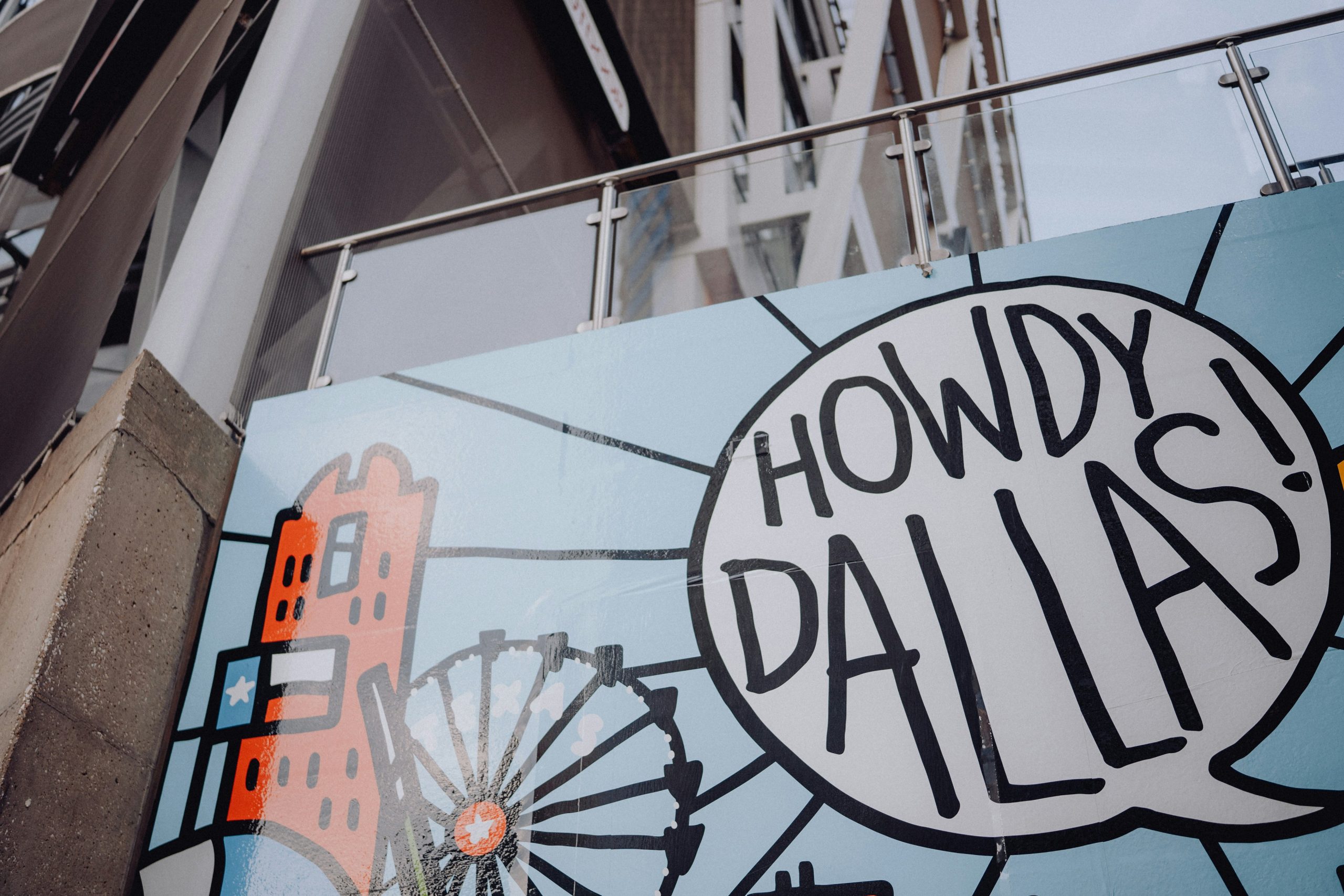
Design District, Dallas, Texas
Managed IT Services, Cybersecurity & Creative Technology Infrastructure for the Dallas Design District
The Dallas Design District occupies a stretch of converted warehouses, former manufacturing buildings, and now purpose-built creative spaces between the Trinity River and Uptown — a neighborhood that has spent five decades evolving from an industrial wholesale district into the most concentrated creative and design commercial environment in the American South. The district’s central corridors — Dragon Street, the gallery row whose showrooms and art spaces have drawn collectors, designers, and artists from across Dallas and beyond for decades; Hi Line Drive, home to international interior design showrooms and the district’s most acclaimed restaurants; and Oak Lawn Avenue at the district’s northeastern boundary connecting the Design District to Uptown and the Knox/Henderson corridor — collectively host more than 370 shops, art galleries, and design showrooms, making it the epicenter of Dallas’s gallery scene and the operational heart of the city’s architecture, interior design, and creative services industries.
The district’s largest property owner — HN Capital Partners, which controls more than 40 acres and nearly 800,000 square feet of showroom, retail, and flexible office space across 19 buildings including the Dallas Decorative Center — has announced Hi Line Square: a landmark mixed-use development at 1650 Oak Lawn Avenue at I-35E designed by Perkins & Will that will bring a 17-story, 186,000-square-foot office tower, a 30-story residential tower with 300 luxury units, and 45,000 square feet of curated retail, design showroom, and dining space to the district. Construction is anticipated to begin in 2026, with completion targeted for 2030. Hi Line Square connects directly to the Trinity Strand Trail and the Loop Connector leading to the Katy Trail — positioning the Design District as a walkable urban environment whose commercial density will grow significantly as the development delivers. The professional services and technology organizations that will fill Hi Line Square’s 186,000 square feet of Class A office space are exactly the organizations Lionhive serves.
Lionhive provides Managed IT Services, Cybersecurity & Compliance, Cloud Governance, Physical Security Integration, and vCIO Advisory to the art galleries, luxury showrooms, architecture and interior design firms, creative agencies, and professional services organizations operating across the Design District — and to the businesses moving into the corridor as Hi Line Square and surrounding developments deliver new commercial space.
Every organization in the Design District has made deliberate aesthetic choices about their environment — the warehouse bones preserved, the concrete floors refinished, the lighting curated to show merchandise at its best. The technology serving these organizations should reflect the same intentionality. Visible, clunky, unreliable IT is a brand problem in a district where everything communicates something about the people who made it.
Art Galleries — Dragon Street, Glass Street & Beyond
The Design District’s gallery community has transformed Dragon Street and expanded into Levee Street, Glass Street, Monitor Street, and the farthest corners of the district’s warehouse blocks — making the Design District the primary destination for Dallas art collecting, gallery representation, and creative exhibition. Galleries including Dallas Contemporary on Glass Street, Craighead Green Gallery, Samuel Lynne Galleries, CINQ Gallery, and the dozens of independent spaces operating from the district’s converted warehouses manage significant physical inventory — paintings, sculptures, and installation works representing six- and seven-figure value — alongside the digital records, collector databases, and transaction histories that constitute the operational infrastructure of a contemporary art business.
The technology requirements of art galleries operate on two parallel tracks that generic IT providers rarely address together. The first is physical asset protection — the surveillance, access control, and environmental monitoring that protect irreplaceable physical works in spaces that host public openings, trade events, and private viewings where controlled access is a security and insurance requirement. The second is client relationship and transaction management — the collector databases, consignment tracking, invoice management, and sales pipeline tools that drive gallery revenue. A gallery whose collector relationships are managed through a combination of handwritten notes, shared spreadsheets, and disconnected email threads is leaving significant revenue on the table regardless of the quality of what it shows.
PCI DSS compliance applies to any gallery processing payment card transactions — which includes virtually every gallery selling work directly at events, through its website, or at its physical space. High-value art transactions processed by card create cardholder data environments that require proper network segmentation, payment system security, and the documentation that card brands require. For galleries accepting international payments from European collectors, GDPR compliance obligations apply to the personal data of EU residents processed in connection with transactions and collector relationship management.
Lionhive provides managed IT and physical security integration for Design District art galleries — enterprise-grade surveillance systems appropriate to the visual environment of a gallery space (discreet cameras that don’t dominate the aesthetic, high-definition coverage of all access points and display areas), access control systems that manage public viewing hours and private events separately, PCI-compliant payment processing infrastructure, collector relationship management through Salesforce and HubSpot implementation that converts the gallery’s client data from scattered records into a managed pipeline, and reliable high-bandwidth connectivity for digital catalog presentations and client video consultations.
Interior Design Showrooms — Hi Line Drive & the Dallas Decorative Center
The to-the-trade interior design showrooms that define the Design District’s commercial heritage — international furniture brands, fabric and wallcovering houses, lighting showrooms, and the luxury home furnishings operations whose clientele are Dallas’s most prominent interior designers and their residential and commercial clients — operate with technology requirements shaped by the high-value inventory they manage and the client relationships they maintain. The Dallas Decorative Center and the Hi Line Drive showroom corridor house collections representing millions of dollars in display inventory and manage the order, specification, and fulfillment infrastructure of a wholesale trade business serving designer clients whose projects can span years from initial specification to final installation.
Showroom operations depend on reliable connectivity for digital catalog presentations — the iPad in the designer’s hands showing the full product line from a showroom floor needs enterprise-grade wireless that doesn’t fail during a client presentation — and for the order management, inventory tracking, and client account systems that coordinate specifications across multi-year project timelines. Large warehouse showroom footprints create wireless coverage challenges that consumer-grade Wi-Fi consistently fails to address, and the converted industrial buildings that define the Design District’s architecture require thoughtful network infrastructure design to deliver consistent coverage across open floor plans with concrete and steel construction.
Lionhive designs and manages enterprise wireless infrastructure for Design District showrooms — appropriate access point density and placement for large-format warehouse spaces, network segmentation between showroom sales systems, guest and designer client Wi-Fi, and back-office operations, and the redundant connectivity architecture with fiber primary and 4G/5G failover that ensures a showroom’s payment processing and client systems stay operational regardless of carrier issues. PCI DSS compliance for payment environments, Microsoft 365 governance for showroom business operations, and the CRM implementation that manages the designer relationships that define showroom revenue.
Architecture & Interior Design Firms — High-Performance Creative Infrastructure
The architecture and interior design practices operating from the Design District’s converted warehouse office spaces manage some of the most data-intensive workflows in any professional services category. BIM models for large commercial projects, high-resolution 3D renderings, material specification libraries, structural drawings, and the project archives that accumulate across multi-year engagements collectively constitute file environments that can run to terabytes per project — and whose loss to a hardware failure or ransomware attack represents not just data recovery costs but the potential loss of years of design development that cannot be fully recreated. Autodesk Revit, AutoCAD, Adobe Creative Suite, and Cinema 4D are computationally demanding applications that require workstations specified for the workload rather than the price point — and cloud collaboration workflows that allow distributed design teams to work simultaneously on large project files require the network infrastructure and cloud architecture to support them reliably.
The shift from on-premises file servers to cloud-based design collaboration has created specific challenges for architecture and interior design firms — the file sizes that define design work don’t always translate cleanly to cloud platforms designed primarily for document management rather than large binary files. Lionhive designs cloud infrastructure specifically for design workflows — Azure and AWS storage architecture optimized for large-format design files with the throughput characteristics that Revit and rendering software require, backup solutions validated through regular restoration testing against actual project file libraries rather than theoretical recovery procedures, and the endpoint management that governs the high-performance workstations Design District architecture firms depend on for rendering and visualization work.
For architecture firms working on government and public sector projects — designing municipal facilities, public infrastructure, or projects for regulated institutional clients — CMMC 2.0 requirements may apply if Controlled Unclassified Information is involved in the project scope. Healthcare facility architecture projects introduce HIPAA considerations for building systems and data management involving patient information. Lionhive addresses these project-specific compliance requirements alongside the standard IT governance that Design District architecture firms require.
Creative Agencies & Marketing Organizations
The Design District’s converted warehouse environment — open floor plans, exposed concrete, natural light through industrial clerestory windows — has become a preferred address for Dallas’s creative and marketing agencies whose physical environment is itself a client-facing statement. These agencies manage client brand assets, unreleased campaign creative, media strategy documents, and increasingly the consumer behavioral data and analytics that underpin digital marketing campaigns for national and international clients. The unauthorized disclosure of a client’s pre-launch campaign creative, media buy strategy, or brand development work creates commercial consequences that go beyond regulatory exposure into the kind of reputational damage that ends agency-client relationships built over years.
Creative agencies handling EU consumer data in digital advertising campaigns, managing the personal data of European clients or their customers, or whose data processing activities involve international transfers face GDPR compliance obligations regardless of their Dallas headquarters. The Illinois Biometric Information Privacy Act (BIPA) is less directly relevant for Dallas agencies, but campaigns involving facial recognition, biometric data, or any technology processing biometric identifiers of Illinois consumers create BIPA exposure. For agencies with enterprise and institutional clients whose procurement process includes vendor security questionnaires, SOC 2 Type II certification increasingly appears as a condition of engagement — particularly for agencies handling sensitive client brand strategy and unreleased creative.
Lionhive provides managed IT and cybersecurity for Design District creative and marketing agencies — secure asset storage and collaboration infrastructure on Microsoft 365 and Google Workspace with sensitivity labels protecting client-confidential creative assets, endpoint management for the Mac and Windows environments that creative teams typically operate across, identity and access management through Microsoft Entra ID, and the Salesforce and HubSpot Revenue Operations implementation that converts an agency’s client development activity into a managed, measurable pipeline rather than a relationship-dependent process that lives in account team members’ heads.
Hi Line Square & the Next Generation of Design District Tenants
When Hi Line Square — the 17-story, 186,000-square-foot office tower designed by Perkins & Will at the corner of Oak Lawn and I-35E — delivers its first tenants, the Design District’s professional services and technology organization population will expand significantly. The organizations that choose a Design District address over Uptown or Preston Center will be making a deliberate statement about their positioning — creative-leaning, design-conscious, and attracted to the energy of a neighborhood whose identity is built around aesthetic excellence. These organizations — technology companies, consulting firms, media organizations, and the professional services practices that serve the creative industry — will bring the same managed IT, cybersecurity, and compliance requirements that Lionhive serves in every other Dallas commercial district, in an environment defined by the standards that the Design District has built its reputation on.
Lionhive is positioned to serve Hi Line Square tenants from day one — with the network infrastructure design, Microsoft 365 and cloud governance, cybersecurity program implementation, and vCIO Advisory that organizations moving into new Class A office environments need from their first day in the space rather than months after settling in.
Core Services for Design District Organizations
Managed IT Services — 24/7 proactive monitoring, patch management, backup validation, and SLA-backed helpdesk support for Design District organizations across galleries, showrooms, architecture firms, creative agencies, and professional services — delivered at the standard that a district defined by excellence expects from every vendor relationship.
Enterprise Wireless Infrastructure — Access point design and deployment for large-format warehouse and industrial spaces, network segmentation between operational and guest environments, and redundant connectivity with fiber primary and 5G failover. The wireless infrastructure that Design District showroom floor presentations and open-plan creative offices require.
Physical Security Integration — Discreet, high-definition surveillance appropriate to gallery and showroom environments, access control systems that manage public, trade, and private event access separately, and network infrastructure supporting security systems integrated with — not dominating — the spaces they protect.
Cloud Storage & Design Workflow Infrastructure — Azure and AWS architecture optimized for large BIM, CAD, and rendering file workflows, validated backup and disaster recovery for project archives, and endpoint management for the high-performance workstations that architecture and design software demands.
Cybersecurity & Compliance — PCI DSS for payment environments, GDPR for international client and consumer data, SOC 2 for agencies with enterprise client procurement requirements, and NIST CSF 2.0 for organizations building defensible security programs. Endpoint detection and response via CrowdStrike and SentinelOne, identity management through Microsoft Entra ID, 24/7 monitoring through Lionhive’s Managed SOC.
Revenue Operations — Salesforce and HubSpot implementation for galleries converting collector relationships into managed pipelines, for showrooms tracking designer client accounts across multi-year project timelines, and for creative agencies building the go-to-market infrastructure that enterprise client relationships require. The Revenue Operations practice that connects the Design District’s relationship-driven businesses to measurable, managed revenue outcomes.
vCIO Advisory — Strategic technology leadership, IT roadmaps, and vendor management for Design District organizations that have outgrown reactive IT management and need technology guidance that reflects their creative and commercial ambitions — without the overhead of a full-time technology executive.
📞 Partner with Lionhive in the Design District
The Dallas Design District is defined by organizations that take their work seriously enough to choose a converted warehouse over a conventional office park — and whose clients have chosen them for the same reason. Lionhive serves this community with the technology reliability, security depth, and creative infrastructure expertise that the district’s standard demands. Whether you are a gallery protecting a seven-figure collection on Dragon Street, an architecture firm managing a decade of project archives on Glass Street, a showroom serving designer clients from Hi Line Drive, or a creative agency about to move into Hi Line Square — Lionhive is ready to be the technology partner that matches the environment you’ve built. To discuss your IT, cybersecurity, or infrastructure requirements, contact us directly or book a strategy session.
👉 Book a Design District Strategy Session
📞 +1 469 364 9010
Part of Lionhive’s Dallas, Texas coverage — serving organizations across the Design District, Uptown, Victory Park, Stemmons Corridor, and throughout Dallas.