
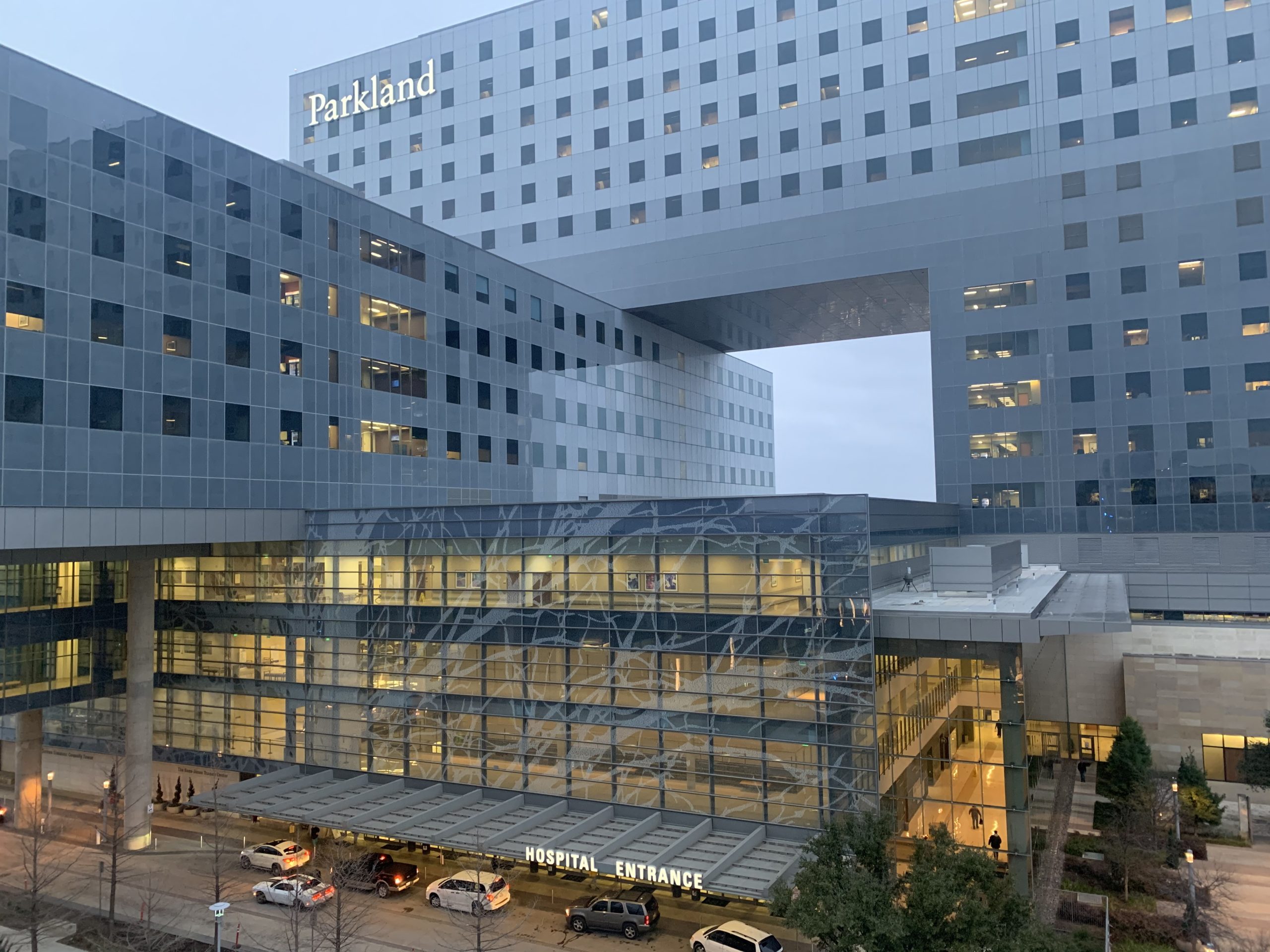
Medical District, Dallas, Texas
Managed IT Services, Cybersecurity & Healthcare Technology Consulting for the Southwestern Medical District
The Southwestern Medical District is the most concentrated medical and biomedical research environment in Texas — a campus anchoring the northwest edge of Dallas where four of the most significant healthcare institutions in the American South operate in close proximity along Harry Hines Boulevard. The District employs more than 38,500 people, its healthcare professionals treat nearly 2.5 million patients annually, and the research being conducted within its 500+ basic science and translational research laboratories has produced Nobel Prize-winning discoveries and fundamentally altered how the world understands and treats disease. More than 40% of all physicians practicing in Dallas County received their training at the institutions within this District. What happens here shapes medicine not just in Texas but globally.
The four anchors of the Southwestern Medical District define its institutional character. UT Southwestern Medical Center — the #1 hospital in Dallas-Fort Worth for the ninth consecutive year according to U.S. News & World Report’s 2025-2026 Best Hospitals rankings, nationally ranked in 12 specialties, with faculty that includes six Nobel Prize winners (four currently on staff), 25 members of the National Academy of Sciences, and 21 members of the National Academy of Medicine — is one of the premier academic medical centers in the United States. Its Harold C. Simmons Comprehensive Cancer Center, redesignated by the National Cancer Institute as a Comprehensive Cancer Center in 2026 and ranked in the top 20 nationally, is among only 32 US cancer research centers designated as NCI National Clinical Trials Network Lead Academic Participating Sites. Parkland Memorial Hospital — Dallas County’s only public hospital, one of the largest in the country, averaging more than one million outpatient visits annually and delivering approximately 13,000 babies each year — serves as the primary teaching hospital for UT Southwestern Medical School. Children’s Health / Children’s Medical Center Dallas — the seventh-largest pediatric hospital in the nation, one of only 14 national pediatric research centers sanctioned by the National Institutes of Health, and the only pediatric Level I Trauma Center in North Texas — has served over 570,000 patients annually across more than 50 specialty programs. And William P. Clements Jr. University Hospital, UTSW’s private hospital, rounds out a campus whose scale and research output places Dallas in the national conversation alongside Boston, Houston, and San Francisco as a life sciences destination of consequence.
The construction underway in the District signals what the next decade looks like. The $5 billion UT Southwestern and Children’s Health joint pediatric medical center — which broke ground in October 2024 and will consist of two 12-story towers, an eight-story tower, and the Moody Children’s Hospital, connected by a skybridge to Clements University Hospital — will be one of the most significant pediatric medical facilities in the United States when it opens. The Texas Behavioral Health Center at UT Southwestern, a 505,000-square-foot facility with 292 beds representing DFW’s first state behavioral health hospital, is opening Summer 2026 as part of Texas’s $1.2 billion expansion of mental health services. Adjacent to the Medical District at Pegasus Park, the ARPA-H Customer Experience Hub — the Dallas node of the $2.5 billion federal Advanced Research Projects Agency for Health — is positioning the Dallas Medical District corridor as an alternative to Boston and Silicon Valley for biomedical research investment.
Lionhive provides Managed IT Services, Cybersecurity & Compliance, Healthcare IT Consulting, Clinical Research Technology Infrastructure, FDA 21 CFR Part 11 governance, HIPAA Business Associate program management, and Life Sciences IT to the clinical research organizations, healthcare technology vendors, biotech and pharmaceutical companies, physician private practices, healthcare administrative organizations, and life sciences startups operating within and adjacent to the Southwestern Medical District.
UT Southwestern, Parkland, and Children’s Health are enterprise-scale institutions with dedicated internal IT departments, state-level procurement processes, and vendor management teams whose security questionnaires are written by people who understand healthcare cybersecurity professionally. Lionhive does not compete to be the IT department of a 38,500-person institution. Lionhive serves the ecosystem around those institutions — the clinical research organizations, health IT vendors, life sciences companies, specialty practices, and healthcare administrative organizations whose client relationships with the District’s anchor institutions require documented security programs, HIPAA compliance infrastructure, and the regulatory depth that generic managed IT providers don’t deliver.
Clinical Research Organizations & FDA 21 CFR Part 11
The Southwestern Medical District’s research intensity — 500+ basic science and translational research labs at UTSW alone, Children’s Health as one of only 14 NIH-sanctioned national pediatric research centers, the Simmons Cancer Center as an NCI National Clinical Trials Network Lead Academic Participating Site — generates a significant ecosystem of clinical research organizations (CROs), contract research organizations, institutional review board (IRB) services, clinical data management companies, and research site support organizations whose operations intersect with the District’s anchor institutions through formal research agreements, clinical trial coordination arrangements, and the vendor relationships that support federally funded and industry-sponsored research.
Organizations conducting or supporting clinical research operate under FDA 21 CFR Part 11 — the regulation governing electronic records and electronic signatures in FDA-regulated research — which requires that electronic systems used to create, modify, maintain, archive, retrieve, or transmit clinical data meet specific requirements for audit trails, access controls, system validation, and the integrity and authenticity of electronic signatures. Clinical trial data systems, electronic case report forms, regulatory submission systems, and the laboratory information management systems supporting research operations are all potentially within 21 CFR Part 11 scope. The consequences of Part 11 deficiencies identified during FDA inspection — warning letters, data integrity findings, and in serious cases the exclusion of affected data from regulatory submissions — are career-defining events in clinical research operations.
Beyond Part 11, clinical research organizations handling identifiable patient data collected during research protocols operate as HIPAA Business Associates to the covered entity institutions (UT Southwestern, Parkland, Children’s Health) with whom they have research agreements — meaning the full weight of HIPAA’s technical, physical, and administrative safeguards applies to their data environments, and their HHS Office for Civil Rights audit exposure includes both the research data they handle directly and the electronic protected health information they access through their covered entity relationships. The HHS Office for Human Research Protections (OHRP) adds another layer of oversight for research involving human subjects — governing informed consent documentation, IRB oversight requirements, and the data protection obligations that attach to federally funded human subjects research.
UT Southwestern alone received over $299 million in NIH funding in 2024 — more than 70% of the $414 million the entire DFW region received. The research organizations affiliated with this funding level face federal information security requirements for NIH-funded research data, including alignment with NIST SP 800-171 for Controlled Unclassified Information in research data environments and, for defense health research contracts, CMMC 2.0 compliance requirements that define the cybersecurity baseline for defense contractor and defense research participation.
Lionhive builds IT governance and security programs for Medical District clinical research organizations — 21 CFR Part 11-compliant data environment architecture and system validation documentation, HIPAA Business Associate Agreement compliance programs with the technical safeguards, physical safeguards, and administrative safeguards documentation that OCR audit requires, cloud governance across AWS and Azure research data environments, audit trail infrastructure that demonstrates data integrity for regulatory submissions, and the identity and access management through Microsoft Entra ID and Okta that governs who accesses research data and leaves the audit record that FDA inspection requires.
Healthcare Technology Vendors & HIPAA Business Associates
Every technology vendor, software company, billing and revenue cycle management organization, coding and transcription service, cloud storage provider, and professional services firm with access to electronic protected health information from Parkland, UT Southwestern, or Children’s Health is a HIPAA Business Associate — subject to the full scope of the HIPAA Security Rule’s technical, physical, and administrative safeguard requirements under their Business Associate Agreements. The 2026 finalization of the proposed HIPAA Security Rule updates eliminates the distinction between “required” and “addressable” safeguards that has historically allowed organizations to defer implementation, mandates annual risk assessments, and explicitly addresses AI systems in clinical environments — raising the compliance baseline for every Business Associate operating in the Medical District ecosystem.
The Texas Medical Records Privacy Act (Texas Health & Safety Code Chapter 181, commonly called Texas HB 300) extends specific requirements beyond HIPAA for covered entities and their agents handling protected health information of Texas residents — including annual employee training requirements, written policies governing PHI disclosure, and breach notification obligations that may be triggered at lower thresholds than HIPAA. Healthcare technology vendors serving the Medical District’s Texas-based institutions must address both the federal HIPAA framework and Texas’s additional requirements in their compliance programs.
Lionhive provides HIPAA Business Associate compliance programs for Medical District healthcare technology vendors — gap assessment against the updated HIPAA Security Rule requirements, written information security plans aligned with both HIPAA and Texas HB 300, technical safeguard implementation including encryption at rest and in transit, endpoint detection and response via CrowdStrike and SentinelOne, access controls and audit logging for systems processing PHI, the Business Associate Agreement review and compliance documentation that covered entity procurement teams require as a condition of vendor onboarding, and 24/7 monitoring through Lionhive’s Managed SOC for systems touching protected health information.
Life Sciences, Biotech & Pharmaceutical Companies
Dallas raised $4.8 billion across 320+ investment deals in 2025 — healthcare and health technology absorbed $1.2 billion, the largest sector by a wide margin, according to the DFW healthtech investment ecosystem. CBRE’s Life Sciences Talent Trends 2025 report ranks Dallas 12th for medtech talent, 13th for biopharma manufacturing talent, and 15th for biopharma R&D talent out of 100 US metro areas examined. The life sciences companies clustering around the Medical District corridor — including the biotech startups at Pegasus Park whose ARPA-H hub is designed to translate Medical District research into commercial products — operate at a specific intersection of clinical, regulatory, and commercial technology requirements.
Clinical-stage pharmaceutical and biotech companies operating in the Medical District ecosystem face the full stack of life sciences regulatory technology requirements. Drug development data and laboratory records are subject to FDA 21 CFR Part 11. Clinical trial patient data is protected health information subject to HIPAA. Research data involving controlled technology may be subject to Bureau of Industry and Security (BIS) export control regulations — creating technology access governance requirements for international collaborators and employees. Intellectual property — the compound library data, genomic datasets, clinical efficacy results, and manufacturing process knowledge that represents years of R&D investment — is among the most targeted categories of information by nation-state threat actors, and the FBI’s economic espionage guidance specifically identifies pharmaceutical and biomedical research as high-value targets.
Medical device companies with DFW operations — including the established players like Abbott Laboratories, Stryker, and Smith & Nephew with regional presence, and the medical device startups developing products in the Medical District ecosystem — face FDA medical device cybersecurity guidance for connected devices, requiring security risk assessments, vulnerability management programs, and post-market cybersecurity surveillance for devices with network connectivity. Lionhive builds the cloud security, intellectual property protection, and regulatory compliance infrastructure that life sciences and medical device companies in the Medical District corridor require — Zero Trust Architecture protecting research data, Part 11-compliant data environment design, and the SOC 2 Type II readiness that venture-backed life sciences companies need to pass enterprise hospital system and health plan procurement requirements.
Physician Private Practices & Specialty Clinics
The Southwestern Medical District’s concentration of physician training produces a corresponding concentration of private medical practices, specialty clinics, and ambulatory surgery centers operating in the surrounding Oak Lawn, Uptown, and adjacent neighborhoods — physician practices whose principals trained at UTSW, Parkland, or Children’s Health and whose referral networks connect back to the District’s anchor institutions. These practices — in cardiology, oncology, neurology, orthopedics, gastroenterology, and every specialty represented in UTSW’s nationally ranked programs — manage electronic protected health information under HIPAA, process payment card data under PCI DSS, and serve patients whose expectations for discretion and security are shaped by their relationship with institutions whose own standards are internationally recognized.
The proposed HIPAA Security Rule updates finalizing in 2026 eliminate the addressable safeguard flexibility that many private practices have historically relied upon to defer technical control implementation. Annual risk assessments, documented technical safeguards for all systems touching PHI, and explicit AI governance requirements for clinical AI tools create a more demanding compliance baseline for Medical District-adjacent private practices than what most have historically maintained. For practices that serve patients affiliated with UTSW’s research programs, clinical trial participant data adds an additional layer of privacy and consent requirements beyond standard HIPAA.
Lionhive provides HIPAA-aligned managed IT for Medical District-adjacent physician practices — secure EHR access through Epic and leading practice management systems, encrypted patient communication platforms compliant with HIPAA’s technical safeguard requirements for electronic communications, endpoint management through Microsoft Intune, medical device network segmentation for connected clinical devices, annual HIPAA risk assessments with Texas HB 300 review, and the 24/7 monitoring that ensures patient-facing clinical systems maintain the uptime that patient care requires. For practices subject to HHS OCR audit, Lionhive provides the risk assessment documentation, technical safeguards evidence, and breach notification procedures that satisfy OCR examination requirements.
Healthcare Administrative Services — Revenue Cycle, Coding & Billing
The administrative and operational ecosystem supporting the Medical District’s clinical volume — revenue cycle management companies, medical coding and billing services, prior authorization and insurance coordination organizations, healthcare staffing firms, and the professional employer organizations serving the District’s 38,500-person workforce — process protected health information as HIPAA Business Associates at significant scale. Revenue cycle and billing organizations handling claims data for patients at Parkland, UTSW, and Children’s Health are operating under Business Associate Agreements whose breach would create notification obligations to institutions whose legal and compliance teams take vendor obligations seriously.
The concentration of healthcare administrative services in the Medical District corridor means that these organizations face not only HIPAA compliance requirements but increasingly the cybersecurity questionnaire scrutiny of the enterprise hospital systems whose billing workflows they manage. UT Southwestern’s and Children’s Health’s vendor security assessment programs are calibrated to the standards of major academic medical centers — which are more demanding than standard commercial procurement. Lionhive builds the HIPAA Business Associate compliance programs, documented security controls, and vendor assessment readiness that Medical District administrative service organizations need to maintain and expand their hospital system relationships.
The Texas Behavioral Health Center & Mental Health Services
The Texas Behavioral Health Center at UT Southwestern — opening Summer 2026 as DFW’s first state behavioral health hospital, with 292 beds in a 505,000-square-foot facility and operated by UT Southwestern — introduces a specific and significant additional dimension to the Medical District’s compliance environment. Behavioral health records are protected by both HIPAA and by 42 CFR Part 2 — the federal regulation governing substance use disorder treatment records that provides substantially stronger privacy protections than standard HIPAA, requiring specific patient consent for nearly all disclosures including those that would be permissible under HIPAA without consent. Organizations providing technology or administrative services to behavioral health programs must specifically address 42 CFR Part 2’s consent and disclosure requirements alongside standard HIPAA compliance.
The behavioral health technology vendors, telepsychiatry platform providers, and digital mental health organizations operating in the Medical District ecosystem face this more demanding regulatory environment. Lionhive addresses 42 CFR Part 2 alongside HIPAA in compliance programs for organizations serving the Medical District’s behavioral health community.
Core Services for Medical District Organizations
HIPAA Compliance Programs — Updated HIPAA Security Rule alignment for the 2026 finalized requirements, Texas HB 300 compliance, annual risk assessments, Business Associate Agreement compliance documentation, technical safeguards implementation, and the written information security policies and procedures that OCR audit and hospital system procurement require.
FDA 21 CFR Part 11 & Clinical Research IT — Part 11-compliant data environment architecture, system validation documentation, audit trail infrastructure for research data systems, electronic signature management, and cloud governance for AWS and Azure research environments. The regulatory technology infrastructure that clinical research operations require to pass FDA inspection.
Managed IT Services — 24/7 proactive monitoring, patch management, backup validation, and SLA-backed helpdesk support for Medical District organizations across clinical research, healthcare technology, life sciences, physician practices, and healthcare administrative services. Support calibrated to the uptime requirements of organizations operating in clinical and research environments where system availability directly affects patient care and research integrity.
Cybersecurity & Compliance — HIPAA, Texas HB 300, 42 CFR Part 2, FDA 21 CFR Part 11, NIST SP 800-171, CMMC 2.0 for defense health research, and NIST CSF 2.0 — integrated compliance programs for the Medical District’s layered regulatory environment. Endpoint detection and response via CrowdStrike and SentinelOne, identity management through Microsoft Entra ID and Okta, 24/7 monitoring through Lionhive’s Managed SOC.
SOC 2 Type II Readiness — For Medical District healthcare technology vendors, clinical research organizations, and life sciences companies whose hospital system and enterprise client relationships require demonstrated security program maturity. Built to pass the vendor security assessments of academic medical center procurement teams — the most demanding healthcare vendor assessments in Texas.
Zero Trust Architecture — Zero Trust implementation aligned with NIST SP 800-207 and the CISA Zero Trust Maturity Model v2.0 for Medical District life sciences and clinical research organizations protecting intellectual property and clinical data against sophisticated threat actors.
Microsoft 365 Governance — Tenant security configuration, Microsoft Purview data governance with HIPAA-aligned sensitivity labels protecting PHI in collaborative research and clinical administrative environments, and Microsoft 365 Copilot deployment with the AI governance controls that clinical and research data environments require.
Incident Response — Incident response programs with notification procedures for HIPAA’s 60-day breach notification to affected individuals, the HHS breach notification portal, Texas HB 300 notification requirements, and — for research organizations — the institutional notification protocols required by NIH grants and federal research agreements. Tested through tabletop exercises that simulate the specific incident scenarios Medical District organizations actually face: ransomware against research data environments, Business Associate breaches from third-party vendor compromise, and unauthorized PHI access by internal users.
📞 Partner with Lionhive in the Medical District
The Southwestern Medical District is building the future of medicine — a $5 billion joint pediatric hospital, DFW’s first state behavioral health center, an ARPA-H research hub positioned to make Dallas a national biomedical research destination. The organizations doing that work — the clinical research organizations, health IT vendors, life sciences companies, physician practices, and healthcare administrative services that make the District function beyond its anchor institutions — deserve a technology partner who understands the regulatory environment they operate in as specifically as they do. Lionhive brings the HIPAA depth, FDA 21 CFR Part 11 expertise, SOC 2 readiness capability, and clinical data governance that Medical District organizations require. To discuss your IT, cybersecurity, or compliance requirements, contact us directly or book a strategy session.
👉 Book a Medical District Strategy Session
📞 +1 469 364 9010
Part of Lionhive’s Dallas, Texas coverage — serving organizations across the Medical District, Oak Lawn, Uptown, Baylor District, and throughout Dallas.